


CONTENT - NIKE
We will travel through the history of the five brands under analysis, from their beginnings to the present day. From the creation of each of them, going through their evolution, troubles brand management, advertising case studies success, strategies of marketing until the slope or misuse of politics in some of them. It also explores how the consumer's perspective on the brand has evolved.
Over the decades, this has become the protagonist while the product itself has taken a back seat.
NIKE
/Story/
Oregon, USA
Bill Bowerman, the track and field coach at the University of Oregon, was experimenting with improvements to help his students run faster. He realized that footwear was vital to the speed a runner could achieve.
The beginning
One of their runners, Phil Knight, was among the first to try their improved shoes. Phil noticed that Adidas and Puma, the brands that dominated the athletic shoe market at the time, didn't offer the same quality as Japanese brands, in this case, Onitsuka Tiger. So, Phil and Bill decided to contact the company's representatives and start their own business distributing the shoes in the United States under the name Blue Ribbon Sport (1964).
The Takeoff
The business proved to be a success, so in 1965 they hired another team member. Jeff Jhonson. He quickly gained significant influence within the group, implementing the first advertising brochures, commercials, and marketing strategies. Furthermore, coinciding with the brand's history, the 1960s and 70s were the golden age of marketing in the United States, which further propelled the brand's growth. In fact, the market was saturated, and Nike and Reebok could barely differentiate their products.
The first store
Jeff was responsible for opening the first physical retail store for Blue Ribbon Sports Tiger Shoes in California. He also established a mail-order system so customers could receive their shoes at home without needing to visit a physical store.

70´s
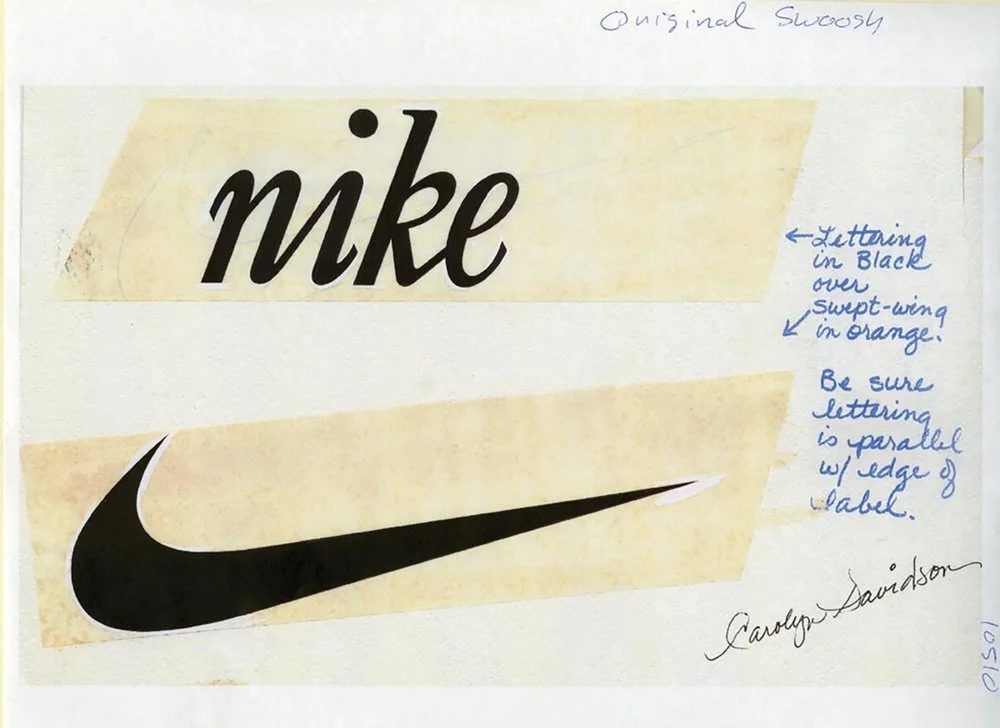
The three businessmen's relationship with Onitsuka was beginning to weaken, so they decided to go independent and create their own brand. Thus, in 1971, they founded Nike. The logo was commissioned from a graphic designer named Carolyn Davidson. She drew inspiration from the Greek goddess of victory, Nike—the name Jeff had chosen for her—and derived the symbol from one of her wings.
First sneaker debut
In 1972, Nike debuted a shoe designed by Bowerman himself at an athletics trial. The first to become the face of the brand was Steve Prefontaine, who sadly passed away at the young age of 24.
First advertising agency
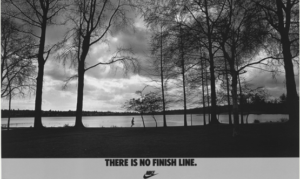
In 1976, they hired John Brown & Partners as their first advertising agency. The following year, they created their first Nike brand poster, with the slogan: “There is no limit to the goal,” and curiously, it didn't feature any products.
80´s
In 1980, Nike went public and entered the market with a 50% share. This, coupled with the launch of its Air Max model, featuring pioneering technology, propelled it to even greater heights. Another advertising agency, Wieden + Kennedy, emerged at this time and remains the leading agency today. In 1982, Nike Evolution was their first project and television debut.
From product to brand
Dan Wieden, co-founder of that agency, would later create the slogan: “Just do it” (1988). In 1985, they signed a promising young basketball player, Michael Jordan, which catapulted the brand even further, as more and more fans of the sport followed his career. In recent years, Nike was moving away from production to focus on the brand image as a symbol of the spirit of sport and self-improvement. This was also a time when marketing tended to focus on the brand rather than the product.
90´s
As a result of the shift in marketing trends, Nike entered a crisis in 1990, having relocated all its factories to countries with very cheap labor and child exploitation. This reduced production costs and allowed them to invest more in marketing. All this controversy severely damaged Nike's image and reputation.
2014/04/nike-ac3ban-liucha
In 1996, Life magazine published a hard-hitting article that ignited controversy surrounding factory workers. The significant social impact of child labor on the brand severely damaged its image. However, Nike responded effectively, creating a strong corporate social responsibility policy and ensuring that the company's activities adhered to basic ethical principles. Simultaneously, two major achievements occurred: the signing of a very young Tiger Woods, a prospect no one expected but which later proved to be a resounding success, and the signing of the Brazilian national football team players.
Year 2000 – present
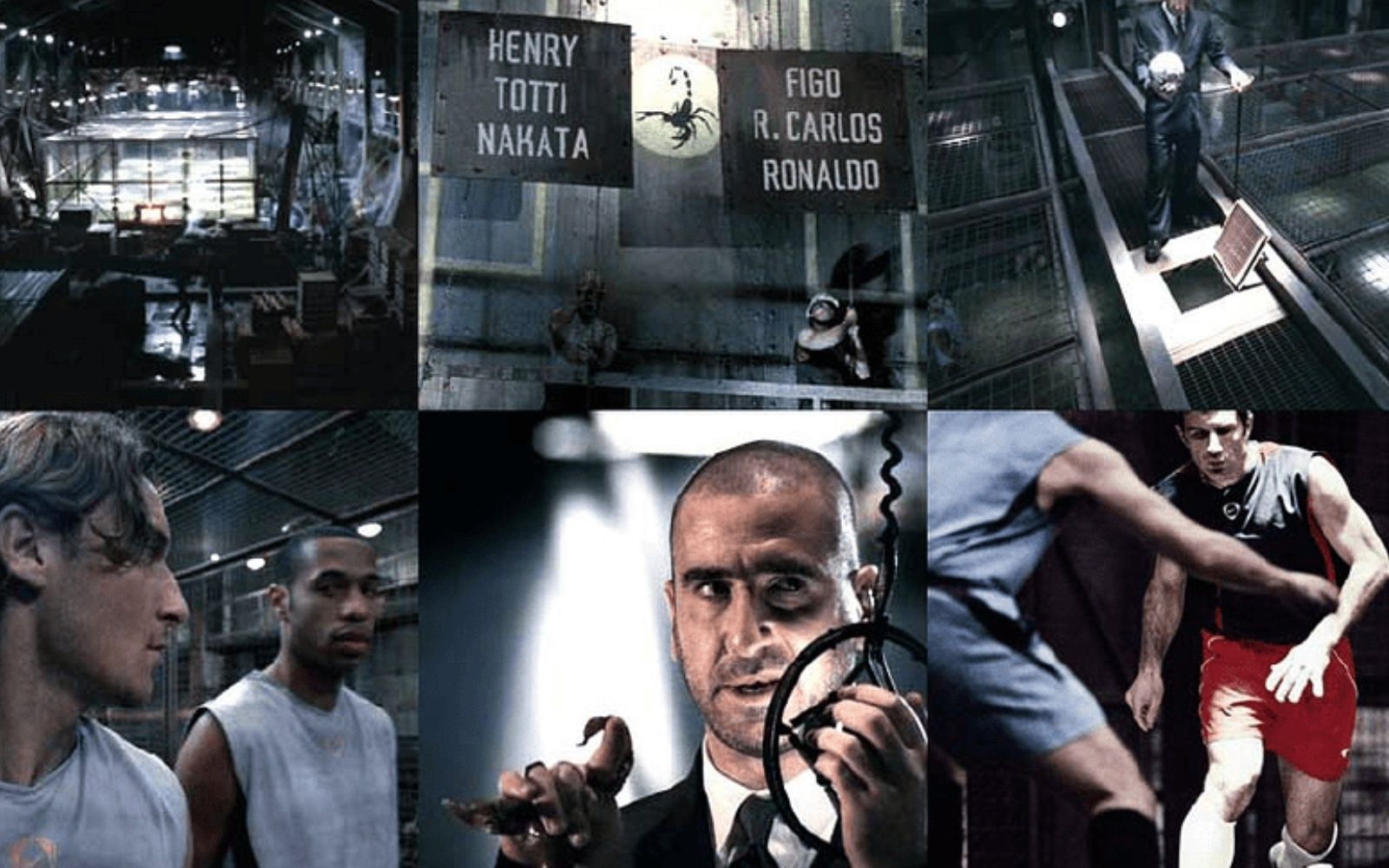
The Secret Tournament
Nike was the undisputed leader in the sports industry. It covered many disciplines and had a very popular streetwear line among young people. In 2002, it launched the "Secret Tournament" campaign during the World Cup, which was a resounding success thanks to three key elements: a great athlete, a great advertisement, and a great product.
Always up-to-date
In recent years, Nike has focused on digital marketing, moving away from traditional methods. It's clear that renowned athletes, tennis players, and professionals have always endorsed Nike's image, but the brand has also adapted well to new technologies and social media, like other brands, recognizing that adaptation is vital in this era and that trends are never static.
/ Semiotic Analysis /
NIKE
Visual Identity
– Composition: Typography and symbol.
– Shape: Geometric and curvilinear.
– Color: Black, conveys sobriety and elegance.
– Typography: Futura STD ExtraBold Condensed Oblique (Modified).
– Possible relationships between form and meaning:
The symbol, also called the "Swoosh," represents the wings of the Greek goddess Nike, goddess of victory.
Brand imagery:
It is a sign of overcoming challenges, attitude, and triumph.
-Values that the brand conveys
Active and motivating personality.
Does it generate relevant experiences?
It's a worthwhile investment if you're an athlete. For many, it's a lifestyle, a way of seeing sport from a competitive perspective.