

CONTENT – REEBOK
We will travel through the history of the five brands under analysis, from their beginnings to the present day. From the creation of each of them, going through their evolution, troubles brand management, advertising case studies success, strategies of marketing until the slope or misuse of politics in some of them. It also explores how the consumer's perspective on the brand has evolved. Over the decades, the consumer has become the central figure, while the product itself has taken a backseat.
REEBOK
History
Bolton, England
It was a time when advertising was beginning to become more technical, professional associations were being founded, congresses were being held, and attempts were being made to use science to test the effectiveness of advertising. The first professional books were also being published. By 1891, the Poster Advertising Association had already been created.
In 1895, Joseph William Foster, the founder of JW Foster & Sons, experimented with his first spiked athletic shoes. Later, he and his sons joined forces to establish JW Foster & Sons. As pioneers of this type of footwear, they were soon featured in the book *Golden Kicks: The Shoes that Changed Sport*, which recounts the remarkable stories behind these groundbreaking innovations in shoe design. However, it was Harold Abrahams, the 100-meter dash champion at the 1924 Olympic Games, who truly propelled them to success by wearing the spiked shoes created by JW Foster.
60´s
It wasn't until this time that the founder's grandsons, Joe Foster and Jeff Foster, created the brand name, Reebok (1958). The name came from a dictionary Joe Foster won as a child in a race, and it means a type of African antelope, rhebok in Afrikaans, thus conveying his corporate philosophy of agility and speed.
70´s
This was a decade in which Reebok was gradually growing with modest revenues, and in which an American wholesaler named Paul Fireman discovered the brand at a sporting goods expo in Chicago (1979). Successful negotiations with the Foster brothers led to Fireman acquiring the rights to market Reebok in the United States.
80´s
In 1981, with just three shoe models, Reebok was already generating $1.5 million. The following year, they debuted their "Reebok Freestyle," the first footwear designed for aerobics enthusiasts. The aerobics boom at the time allowed the brand to exploit this niche with great success, as they had no competition. Not content with that, their expansion began to extend into sports such as tennis and running, among others.
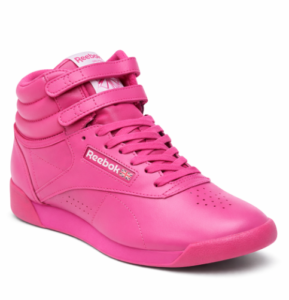
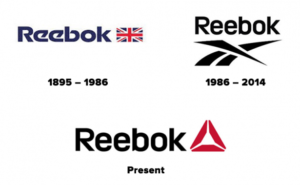
In 1984, Paul Fireman bought the British parent company, which helped solidify their already successful run. Reebok was then leading the fitness revolution by targeting the women's market, while Nike and Adidas competed for dominance in the men's market. In 1986, the logo was changed from the Union Jack to a vector design featuring an abstract line on a racetrack. This also marked the company's transition into a performance brand, with sponsorships in the NFL and NBA, the national football and American basketball leagues, respectively.
Back in 1989, Nike, Reebok's direct competitor, began to see a rise in sales of fashionable sneakers, which led Reebok to launch its Reebok Pump model, an innovative model with the latest technology, although based on Nike's Nike Air.
90´s
In 1991, basketball player Dee Brown successfully promoted the Reebok Pump model. During the famous NBA Slam Dunk Contest, he adjusted his shoes before each jump, which caused sales to skyrocket. Seeing the potential, Reebok began signing contracts with other basketball stars, such as Shaquille O'Neal, who each wore his own signature model. Every young fan wanted to wear their idols' shoes.
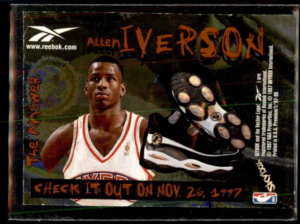
However, this trend was short-lived and led to a large accumulation of unsold stock. By 1992, they offered many different models to cater to a wide range of customers. This diverse range of models and styles, coupled with their attempt to cover so many sectors, prevented the brand from defining its identity. In 1994, they decided to focus solely on sports. Two years later, they signed basketball star Allen Iverson as another brand ambassador, and the following year, in 1997, he wore their new Reebok Answer model, featuring innovative air cushioning technology in the sole. It was a success for both the rising star and Reebok.
Year 2000 – present
They re-signed a promising young tennis player, Venus Williams, and secured a 10-year contract with the NFL. This made them a supplier to the two biggest sports in the world, along with the NBA. In 2001, Jay Margolis took over as chief operating officer until 2004, when Fireman assumed the position again.
But in 2005, the giant Adidas acquired Reebok, intending to compete with the increasingly strong and unstoppable Nike. However, things didn't go as planned, as Reebok's sales plummeted the following year.
In 2007, after several attempts at a comeback, Reebok changed its logo to the delta symbol, which meant "Positive self-change: mental + physical + social," in an attempt to associate itself with the CrossFit sector. However, this marketing effort and corporate initiative proved largely ineffective, as sales in 2018 were disastrously low compared to previous years, and despite its efforts to stay afloat, the brand couldn't recover. It's said that Adidas took advantage of the situation to secure contracts and outmaneuver Reebok, surpassing some of its existing sales strategies. Reebok was steadily losing ground, and competing against the other major brands was going to be a very difficult task.
Semiotic analysis
REEBOK
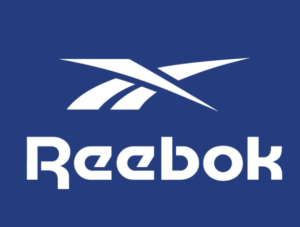
striking Visual visual:
– Composition: Typography and symbol.
– Shape: Curvilinear and abstract.
– Color: Black, conveys elegance.
– Typography: Sans-serif Unione Black Rounded
– Possible relationships between form and meaning:
The three small red pieces, derived from ancient forms, represent each of the positive changes that people can experience: physical, mental, and social changes.
Brand imagery:
We associate it with health, well-being, and positivity.
-Values that the brand conveys
Simple and clear image.
Does it generate relevant experiences?
It's a young brand, for users who play sports and enjoy it. Focused in recent years on the CrossFit sector, it has successfully adapted to other disciplines.